
ok - I've moved to my own wordpress domain... t-rad. all these blogger posts are still up and archived there, but there's a lot of new stuff about my artwrk, making, hacking, and thinking on the new site. update yr links + subscriptions accordingly, and I'll see you there! kthx.
new site:
www.stardotstudio.com
ok bye.
Over the past nine months I’ve been involved as a founding member of Hackerspace Charlotte; it’s involved a lot of logistical crazy and manual labor, but the hackerspace is established enough now that I’ve been using it as a larger lab area for my studio work. I’ve been able to have access to more materials, tools, and resources - and one of my goals for the summer is to learn how to really use the CNC machines at Hackerspace Charlotte and incorporate these automated processes into my studio practice (at the basic level, CNC stands for computer numerical control - it’s a way of having a computer mill or carve a design out of a material like wood, plastic, metals, etc.) Last week, I built a desktop variable power supply for the studio, and I used it as an opportunity to learn how to take my design for the front panel and have the computer carve it out of a pressed bamboo material. Here’s a picture of it:

(yes, that's Futura...)
I did the design in Illustrator, then had to open it in Inkscape in order to use an Inkscape to generate the g-code (the programming language that CNC milling software uses.) In order to generate the g-code, I had to futz around with a lot of finicky, complicated settings...manually. I had to manually take the size of the bit into account, and manually adjust the width of the stroke on the paths, and do a bunch of other manual calculations and adjustments. Then, I took the g-code and imported that into the milling software. Only then was I ready to mill the design.
The problem is that this is a totally ineffective solution for artists. It adds unnecessary layers of complication and removes the immediacy of working with materials in the studio. There has to be a way to automate all those manual calculations and adjustments. Right now, using the CNC machine feels like programming my own analog synth patches, when what I want to do is just pickup my keyboard and start making music right away. Or, it’s like I have to write my own OS every time I want to use my computer, when what I need is a plug-and-play solution. I’ve decided I’m going to try to figure out some sort of solution to this problem so that artists can retain the creative relationship with materiality with minimal hassle. What I’d like is to be able to go relatively directly from my drawing to the milling software, with all the calculations taken care of more or less automatically and invisibly. You know, like a file conversion: I upload my Illustrator (or whatever vector graphics format) file, and it gets translated into data readable by the milling software. Maybe I have to check a few boxes or input a few numbers, that’s fine--I just need to have the process streamlined enough to make using the CNC machine something artists can use in their studios (without also having to be programmers and engineers). Like I said earlier, I imagine that CNC can be a pretty revolutionary tool for artists to use in their studios - not just me, but other people as well.
Now, I know there are both expensive and proprietary solutions out there - things like CAD and CAM software - but there’s a pretty big barrier to those solutions. Mainly, they’re designed for industrial engineering, large-scale factory manufacturing, product design, etc, and they require years of specialized technical training. That’s not going to work for fine artists - first, we need something like SketchUp that you can learn in an afternoon that doesn’t require engineering degrees or a background in computer sciences to become proficient in. Second, the things we’re going to produce are small-scale, one-off pieces that are, because of the nature of art, impractical and based off of imaginative and creative processes and don’t adhere to the same standards and compliances of some industrial widget thing. I’m hoping that somebody has already figured out a solution to this problem. If so, let me know! I’d really appreciate any and all suggestions. If not, I guess I’ll have to figure this out myself. Either way, I’ll post updates about my progress on this particular problem.
tags:
art,
artists,
cnc,
digital design,
g-code,
hackerspace charlotte,
illustrator,
inkscape,
studio practice


(the following is from Robin James, a new writing collaborator to the blog; she'll be helping with some of the longer form posts in the future. these posts, while written from my perspective, are an ambiguous amalgamation of our conversations, my edits, images, and my own writing. --christian)
christian is an artist - he’s really good at making things. My medium is writing--I’m a philosophy professor who specializes in aesthetics and the philosophy of art. So, because my medium is writing and christian’s isn’t, he asked me to help collaborate on some of the blog posts.
I’ve decided to write from christian’s first-person perspective. The “I” in subsequent posts is him, his perspective. Oftentimes it’s more or less direct transcription of a conversation we’ve just had (more on those conversations below). I, Robin, chose to ghostwrite from christian’s first-person perspective because I wanted to preserve the directness and intimacy of a blog format; christian will be the one interacting with readers in comments and the like. It’s his blog, his ideas, his work. I am just structuring it in a clear, easy-to-read way. christian is giving me the content, and I Robin am taking that content and molding it into an appropriately written form. I am keeping my own ideas, thoughts, opinions, etc., out of these posts to the extent that I am consciously able to do so. If anything, I’m hoping my lack of expertise in making will force christian to explain himself more clearly and carefully so that I, Robin, can understand what he’s doing well enough to write about it.
Each blog post is the result of a meeting christian and I have to plan a post. He comes with a specific idea, problem, or project, and I listen to him explain what is on his mind, what he’s doing in his studio, etc. I take notes, and transform those notes into a post. At the end of the meeting, I’ll tell christian what I plan on doing in the post--how I’ll structure it, how I’ll frame the post, etc. - and he’ll approve and/or make suggestions so that I convey what he wants to say, not what I think he wants to say. I then draft the post, and share it with him. He goes over it, makes some edits and changes he wants, and adds in pictures.
I’m excited to be a participant in this blog. While you won’t hear much here from me, Robin, as me, if you are interested in my own work, please check out its-her-factory.blogspot.com.
like I said in my previous post, I've been thinking about robotics as a production model for new ideas on cyborg prostheses, bodies, auto-mechanical instruments, etc. I've also been thinking about robots theoretically, and how they may be conceptually in opposition to the cyborg.
I first started to problematize robots back in November 2009 after watching the Vanguard documentary Remote Control War - exploring the current trends in military robotic technology. this led me to think about robots as this tool, these bodies of military + industrial capability. recently I came back to this idea, wondering how to locate the robot in terms of systems of power. the origins for the term robot is Czech - robota - meaning labor and work, but with the implications of serf, or slave, labor. Hegel's master-slave dialectic would tell us that robots are these things that mediate labor and further distance the operator from the body. these robotic drones are operated by soldiers trained on video game systems, and the violence of war, the violence of the body, is abstracted and removed from the operator's embodied experience. watching Iron Man 2 last night, Robin made the comment that war doesn't really exist without killing - and I began to imagine scenarios where two opposing sides enter armed conflict against each other. instead of human soldiers, the fighting takes place between armed drones and killer robots. I've heard the argument that this future of war is preferable, because there's no loss of life. but, when capitalism produces an endless supply of robotic soldiers, there's nothing at stake, and the war could never end.
of course cyborgs are also a product of capitalism and the military, but rather than using technology to further remove and mediate the body's experience, I wonder if the cyborg's use of technology allows for creatively exploring new possibilities of embodiment. in other words, the cyborgian body opens up possibilities for hyper-abilities, while the robot immediately disallows any exploration and creative use of the body.
so I'm wondering how to negotiate this position in the studio and when navigating an art community (esp. new media) that seems to value (I won't quite say fetishize) the robot-as-art-(maker.) on one hand, I'm enthusiastic and actually really like folks like Eric Singer + LEMUR, and there's no doubt any of the hackers making graffiti-bots have any military or capitalist intentions. I'm also the last person to have any vested agendas in any sort of artist's-hand-gestural-mark-making-purity; that kind of old-and-new sincerity snake oil doesn't have any currency in my studio. No - I'm wondering if there's something to be hacked and subverted from robotics, applying to the body in order to instigate creative ideas outside a tired man/machine dichotomy.
well, I'll let you know how well that turns out for me...
so I've been thinking recently about robots.
not in the K-9+ R2-D2 sense, but more in the production and building as a way to add more sophisticated kinetics + reactivity to my queer cyborgian prostheses. this is also an attempt to implement more music + sound into the pieces. the sshhkk piece that I showed @ Christina Ray gallery last month is really the first (non-alpha) attempt at making mechanized sound-makers, and I think I'm going to follow this thread a little more.
it's no secret that I enjoy re-purposing consumer (esp. @ the junk-shop level) tech., and the hacked animatronics in sshhkk and a few of the leptaxis pieces are pulled from scavenged toys. now though, I want to have a little more control over the motion, and for that, I need to start designing + building the mechanics. I think I have a fairly good knowledge of basic electronics, sensors, connectivity, etc - but I'm still grasping at the kinetic mechanics involved in all of this.
I've been looking a lot at the 2nd section in Simon Penny's "Gizmology" handbook Chris Cassidy gave me last year, and that's a real _basic_ starting point in understanding how to build kinetic devices. It helped me understand how to make the furry breather with a servo + camshaft. Penny's handbook is a quick and dirty explanation of things, but I think I need a little more. I spent most of this week trying to find a good resource on mechanics written for artists, makers, and other non-engineering majors (something like the Make: Electronics text I'm including in some of my class syllabi.) I'm super interested in Dustyn Robert's Making Things Move, because that might be what I'm looking for, but that doesn't get published until December...
I'm also looking for a good way to prototype some simple electromechanical ideas. I picked up a few of the Tamiya educational mechanics kits from a hobby shop a while back, but I'm looking for a broader solution to prototyping mechanical parts for my projects.... For example, if I wanted to figure out the best way to use two servos to articulate motion, I'd like to just pull out a box of parts and start tinkering away. I'm thinking an Erector set or the Lego Mindstorm kits are along the lines of what I need, but they still seem more "toy" and less "robust prototyping platform." My next impulse turned to software - I mean, how do mechanical engineers prototype and test their designs? All the high-level 3D CAD mechanical simulation software is _way_ too complex for what I'm looking for. Maybe a better way to put it is - iMovie is to Final Cut as __?__ is to TurboCAD.
This is what leads me back to robotics - there's a large community of professional, academic, and maker roboticists that I can look to. I just got a whole gig o' txts on robotics, written from the perspective of both "academic theory + practice" and "projects for makers." hopefully this'll serve a good starting point for making my new cyborg prostheses move, howl, pluck, dance, and squirm.
––––––––––––––––––––––––––––––––––––––––––––––––––
(quick note: in an effort to keep thinking + moving fwd. with the wrk, I'm going to try to post on a regular basis. for now, I'm aiming for at least once a week. these notes might be build logs, what I'm currently experimenting with, ideas I'm tossing around, etc. feedback, crits, suggestions are welcome - kthx)
sshhkk v0.1 (studio test) from christian.ryan on Vimeo.
this one was a bit of fun... first new work in the new studio + I got to play with a bit of animatronics I rescued from some drugstore throwaway holiday tchochke.
 unfortunately I melted through the logic board two days after shooting this test; it limited the motion to that strange jerky on/off sequence. now it's just a dumb circuit (by "dumb" i mean just a simple voltage -> switch -> motor, no controlling board.)
at any rate, can't wait to install it in a few days @ the Christina Ray gallery in NYC; lots of fun rattling plz to enjoy.
ok, finished up grad school + now I'm prepping for a group show in New York next month.
I've been by the gallery back in May and it's a great space. I'll be showing a new piece I'm working on....more to come. if you're in NYC at the beginning of August, come by for the opening; it'll be t-rad.
__//
___TENSION
new work on the rise
___August 5 - 22, 2010
christian.ryan
Eric Kniss
Heath Montgomery
Kristin Ashley
Liliya Zalevskaya
Matthew Thomason
Melissa Sullivan
Sam Peck
Christina Ray Gallery
30 Grand Street, Ground Floor
New York NY 10013
212.334.0204
opening reception:
Thursday, August 5 ___ 7-9PM
ok, some older ActionScript work I did in creating a projection mapping environment. drag shapes onto elements in orgSpace to create a region that sprites will react to in some way. the sliders allow changes in size.
in this test, I'm using a particle emitter to bounce cubes off things in orgSpace (the digital lab @ UNCG art dept.)
pixelDrop - ActionScript projection mapping interface from christian.ryan on Vimeo.
in this test, I'm using a particle emitter to bounce cubes off things in orgSpace (the digital lab @ UNCG art dept.)
testing the breathing mechanism of a reactive installation object...not yet convinced. I'd like to see it on a wearable prosthetic, so that's in the pipeline, although I'm not sure if there's time to include the finished result in the thesis show...
leptaxis _breathable (prototype) from christian.ryan on Vimeo.
programmed in Max + uses a Make Controller, servo motor, and some grad school kludgery to make the engineering "operate."
leptaxis _breathable (prototype) from christian.ryan on Vimeo.
programmed in Max + uses a Make Controller, servo motor, and some grad school kludgery to make the engineering "operate."
I saw Dave Hickey speak at the Nasher Museum last Thursday, giving a talk on the current Warhol Polaroid exhibit. While I'm not interested in responding to his nostalgic ramblings of the New York drug underground in the 70's (I think Anthony Bourdain's snark is far more interesting, and without the folksy drawl and underpinnings of homophobia and misogyny) - I think there needs to be some sort of counter to Hickey's claim that Warhol was apolitical and had no inner conflict, rather existing entirely as a construction of his own personality. During the talk, Hickey sort of made the claim that Warhol's images were of this utopian America in which everyone shared a collective joy and no conflict existed. When someone asked about Warhol's darker images (esp. the death screenprints,) Hickey sidestepped the question, saying that Warhol just wanted to make the world safe for effeminate homosexuals and was the reason why Stonewall happened (yeah, I don't know either....)
My suspicion is that Hickey doesn't have a critical understanding of queer theory. Robert Summer's "De-Queering" Warhol -- Again?, talks about how queer identity is overlooked, and sometimes (esp. in Warhol's case) is erased, when dealing with artists and their works. I think Summers begins to bring up an interesting point when he says that Warhol is used to defend heteronormativity, but Warhol's images of young men and boys are somehow ignored. all this leads me to wonder if anyone is looking at Warhol from a queer theory perspective.
I don't know if I'm that interested personally in re-examining Warhol's images through the theoretical queer perspective - although I think it's definitely necessary. What I'm more interested in is thinking about ways to oppose heteronormative tactics of erasing queerness in art histories. In Hickey's case, I think there's only one respone:
I'm the first to admit that I'd rather focus on my current wrk than try to fudge around w/ CSS all day, so I'm using the Evidens template by Design Disease. clean, bold, ok.
more interesting: now that candidacy's official, i'm about to start making more wrk...I'll get around to posting more stable versions of current experiments/investigations, and we'll take it from there.
plz to note: #1 ok.
more interesting: now that candidacy's official, i'm about to start making more wrk...I'll get around to posting more stable versions of current experiments/investigations, and we'll take it from there.
plz to note: #1 ok.
since my last update in january, I've been quite busy with a number of projects. I've shifted away from, for the time being, working on individual "pieces"; instead, I've been focused on learning more programming languages + expanding into physical computing; making smaller "drawings" in order to gain a better fluency with these new tools+tech. I've also become more interested in the interface + active participatory engagement from the audience, in which they're a key element in the activation of the wrk.
I've also spent a good deal of time thinking (most important part of rtwrk, duh) + updating my approach to the studio, and expanding the definition of that practice and the resulting wrk. it's an interesting and less-restrictive place to reposition myself into, and over the course of the next few weeks/months, you'll see some new wrk that stems from this expansive reshifting (once it leaves alpha versions...)
in the meantime, have a productive summer - and I'll leave you with a sneak peak of a prototype I've been working on for installation. it's rough, but I'm sure you'll get the idea.
mtAd (prototype) v0.02 from christian.ryan on Vimeo.

__//posted new wrk today - dance+off
originally I wanted to reconstruct "iconic" clips from cinema in which the main protagonist, denied of any other agency, used dance as a method to vent their frustrations and as protest to the oppositional institutions surrounding them. the original cinematic dance scenes needed to be solo + private - as if the character was having their own therapeutic relationship w/ the body + rhythm.
after shooting a few clips, I thought more about the male body's relationship to dance, esp. when represented on screen; and how the feminizing effects of technology, dance, + pop music alter how this body is sexualized in relation to on screen representation.
obviously, the only way to proceed is a 10-channel video installation w/ endless loops of this exploration.
on a tech. note, this was also a way to test the 1280x720 video of my nikon d90. the 24fps is still sticky for someone who's been using 29.97 for years, but other than that, I'm pleased w/ the results. I'm really interested in finally exploring a decent depth-of-field in video.
__//wrk log: from 10dec2008 to 15jan2009
• revised/recut Architectural Animation project
• built a new enclosure for the body//nes project. this one uses a portable DVD player and the screen is just 1.5" larger; but because the enclosure is more cube-shaped and the scale is slightly bigger, the "weight" of the piece has changed dramatically. before, with a smaller screen and in a smaller project box, the piece felt quieter and intimate. now, since the viewing corridor is longer and the unit has more presence, the piece is definitely more "object-like." it's still intimate, but it's a very different relationship than before. because of this dramatic shift, I probably should change to version v0.3.
• began the nespainter project; basically I figured out all the technical issues surrounding the game/video capture interface. incidentally, this is leading into IRL explorations of the traced motion + generating/processing data from these motions.
• built a scanner-camera. this was actually a longer build - 40+hrs and I'm still not 100% satisfied w/ the hardware. I'm using a Canon LiDE 30 scanner + photo enlarger head. I can get a _decent_ image, but it's not totally there yet. development's on hold until I return to gso.
• continued work on the newjunk v0.5 project. it's still an interactive piece loosely-based on a gender survey I constructed in the fall, but now I really feel that I'm trying to explore the constructed body in relation to gender, and not constructed gender in relation to the body. gender's still a construct, but since it's fluid and dynamic, I wanted to reframe the focus towards the a new fluid+dynamic body. //updated to v0.55 to reflect changes
• submitted to a bunch more exhibs, shows, festivals, conferences, etcs.
• revised the www
__//
I spent all day recutting the proposal for the architectural animation project. I had some new footage I wanted to add, plus added more text/description for the page.
now to submit this project to more places.
plz to enjoy:
architectural animation __// project proposal from christian.ryan on Vimeo.
now to submit this project to more places.
plz to enjoy:
architectural animation __// project proposal from christian.ryan on Vimeo.
Yesterday, r + I went to see the Jenny Holzer exhibit @ the MCA - and for the most part, I thought it a fairly successful showing. I don't have time for a full-on review, but here's my notes/impressions...
_// for years I was sorta turned off by Holzer's Truisms for one reason or another, but their use here moves beyond the content of the text; at one point you stop reading them and simply viscerally experience waves of text. it makes me think of the countless streams of political slogans and news feeds I'm bombarded with and that I have have to wade through - you start ignoring the messages and begin having an experience based on constant retinal data
_// the structures created by the scrolling screens, along with the added light + motion, are both Flavin + disco club. in this instance, Holzer ftw.
_// I don't know if people realize there's text happening on the reverse of some of these screens. it's illegible unless you enter the structure; it makes me wonder what hidden + secret messages scroll within these structures. I sorta like the Schrödinger-esque idea of text broadcasted into intentionally inaccessible space.
_// before we left, Tron was playing on TV. Holzer's floor piece recreates gamespace, but I was disappointed I couldn't actually walk between the streams and experience what that felt like.
_// I wasn't so sure of the printed pieces w/ redacted text... they sorta felt like an opening act, although I'm sure I would be more interested if I viewed them w/o all the flashing lights and retinal seduction.
So I'm doing a small presentation on a "pertinent or personally influential" artist for my digital visualization class (you know, the typical 15/20 minute presentation where you show some work/artist you think is totally rad and where the rest of the class is mostly disinterested), and I decided to present Genesis P-Orridge, focusing on his influential role in the creation of industrial music, his (and Throbbing Gristle's) use of cut-up, hardware hacking, and noise/soundart, within their theoretical framework of oppositional politics + conceptual performance; I'd also look at his current work w/ the "pandrogynous" genderhacking...Phil Morton, early media artist who helped form SAIC's video department (1st in USA=WIN).
I decided to reframe my short talk after recently seeing jonCates' work with the Phil Morton Memorial Archive (full disclosure: I was a student of jon's during undergrad + was one of the founding members of the criticalartware group.) One of the things that struck me, after viewing a number of his pieces, was the similarity in approach to Paik + Cage - specifically, in this shared notion of "rigorous play." Outside of all the other really historically/theoretically important shit that Morton's directly responsible for (...and to which I'm sorta indebted to), it's this playful approach that I really want to think more about, esp. in how it relates to my own art practice.
I was doing my undergrad right at the critical moment when the analog physicality of media art process was being replaced by a weird new digital process. I started my 4D and Video 1 classes on the SVHS deck-to-deck editors, and a few years later edited my undergrad video "thesis" on a Jaz drive. In my earliest classes in SAIC's sound dept. I made loops, real loops with yards of analog magnetic tape, and then the year I graduated I recorded an entire CD with my home DAW. I was pretty eager to get into the digital production and toss the older processes aside, but now in looking @ Morton, Paik, The Kitchen, the Vasulka's, Sadin, et al, their playful experimental approach to new media practice seems esp. pertinent. I'm wondering how their creative strategies translate to current point/click interface, and maybe somehow the playfulness is restrained/confined by the digital tech.
I had the experience of getting a new camera recently and rediscovering the physical act of shooting video/image. I wonder if it's worth looking at these older video processes - the hardware video synthesis, patch cables, reel-to-reels, handycams - as a way to reclaim the tangible and playful; and maybe by doingso uncovering creative approaches or strategies that might've been obscured or lost by rigidness of current interface. I don't think there's the same kind of affectionate play present in After Effects and Final Cut that's inherent in a Sandin Image Processor or Rutt/Etra Video synth.
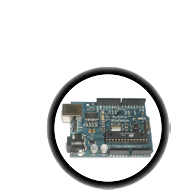
as part of my grad school edu'ing, I've decided to teach myself coding. I've decided to learn Processing, specifically because it's a programming language designed for artists. I'll post my experiments and my results. here's my first foray into programming...like, almost ever.


Subscribe to:
Posts (Atom)